About Connecting Rods
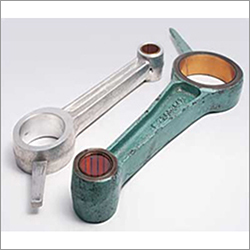
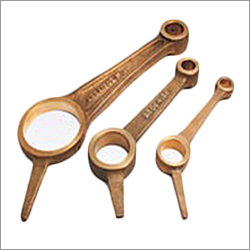
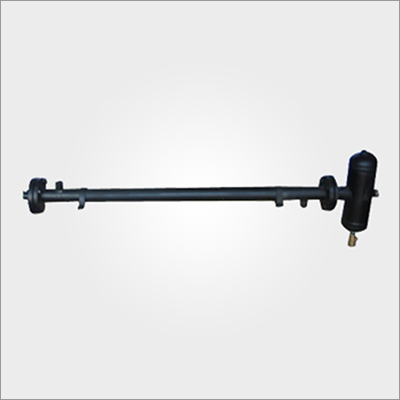
Being one of the most vital running gears, the offered Connecting Rod is used for connecting piston and crank pin. In a reciprocating air compressor, this connecting rod can be used for transforming the rotary motion of crankshaft into the reciprocating motion. We, at our company, make use of top-of-the-line material for manufacturing our connecting rods and ensuring these well-suit the requirements of our customers. For this reason, it is highly demanded in the market.
Precision Engineering for Diverse EnginesOur connecting rods are meticulously CNC machined to OEM standards, ensuring tight tolerances and consistent performance across various engine brands and types. Whether for automotive, marine, agricultural, or industrial applications, each connecting rod guarantees reliability and efficiency.
Customizable Design and Superior BuildClients can choose from a range of materials and configurations to suit specific engine requirements. Options for polished, shot peened, or bespoke surface finishes and custom big end and small end types enable precise adaptation to unique operational demands.
Durability and Corrosion ResistanceEach connecting rod is treated with anti-rust coatings and surface hardened to HRC 32-38 for extended longevity and resistance to wear. Compliance with ISO 9001:2015 ensures every product meets strict quality standards, aiding in prolonged engine life and reduced maintenance cycles.
FAQ's of Connecting Rods:
Q: How are your connecting rods tailored for different engine applications?
A: Our connecting rods are engineered to fit a wide range of engines, including automotive, marine, agricultural, and industrial machinery. They can be manufactured in H-Beam, I-Beam, or custom configurations, with dimensions and features customized as per OEM specifications for seamless integration and optimal performance.
Q: What advantages does the surface-hardened finish of your connecting rods offer?
A: The HRC 32-38 surface-hardened finish boosts the rod's resistance to wear, fatigue, and impact. Combined with anti-rust coatings, this enhances durability, ensuring reliable long-term operation even under challenging conditions or high working pressures.
Q: Where are your connecting rods manufactured and supplied from?
A: All connecting rods are manufactured in India at ISO 9001:2015 certified facilities. We supply both domestically and internationally, packaging the rods using standard export-grade materials or per client requirements to ensure damage-free delivery.
Q: What processes ensure high precision and quality in your connecting rods?
A: Our rods are CNC machined to maintain high tolerances according to OEM standards. Regular in-process inspections, surface treatments like polishing or shot peening, and strict adherence to ISO-certified protocols guarantee consistent quality and reliability.
Q: When should I consider replacing the connecting rods in my engine?
A: Connecting rods should be replaced during major engine overhauls, if there are signs of excessive wear, visible deformation, or after experiencing abnormal engine vibrations. Timely replacement helps maintain engine performance and prevent costly breakdowns.
Q: What materials are your connecting rods made from and how does this benefit performance?
A: Depending on application needs, rods are made from forged steel, alloy steel, or aluminium alloy. These materials offer excellent strength-to-weight ratios, enhance engine responsiveness, and optimize reciprocating motion, especially under high operational stresses.
Q: How do your connecting rods contribute to overall engine efficiency?
A: Their high-precision design and reliable lubrication enable smooth reciprocating motion, reduce energy loss due to friction, and allow for stable power delivery. This translates to improved engine efficiency and longer service intervals.






 Send Inquiry


 Send Inquiry
 Send Inquiry
 Send SMS
 English
 Spanish
 French
 German
 Italian
 Chinese (Simplified)
 Japanese
 Korean
 Arabic
 Portuguese